Soften in the silence
In Yin yoga, you stay in a pose for a few minutes. You take the time to feel where you experience stretch or tension and where you can relax. Your breathing helps you keep your attention on your body.
With these postures, you gently load the connective tissue and work on flexibility. Because you move less, you also gain space to notice whatever thoughts and feelings arise. You do not have to act on them.
Yin yoga offers a quiet moment in a busy day. A chance to slow down and be present with yourself. Discover our Yin classes below.
Discover our Yin yoga classes
in Amsterdam and online
Yin Yoga (EN)
This class is calm and meditative, a nice counterbalance to our busy, fast-paced lives.

Energetic Yin Yoga (EN)
This class helps you wake up gently in the morning. With deep stretches, you create space in your body and start the day clear and relaxed.

Healing Yin Yoga (EN)
In this class, we combine Yin with gentle breathwork, somatic work, and meditation. This allows you to relax deeply, recover, and bring your entire system into balance.

Yin & Self Inquiry (EN)
In this class, we combine Yin postures with the meditative art of reflective self-inquiry to discover who or what you truly are.

Yin Yoga Special (EN)
In this special, we combine Yin yoga with various in-depth themes. This creates space for a deep inner experience.

Yin Yang Yoga
Yin Yang Yoga combines two different qualities in one class: movement and stillness. Together, Yin and Yang create a sense of balance.
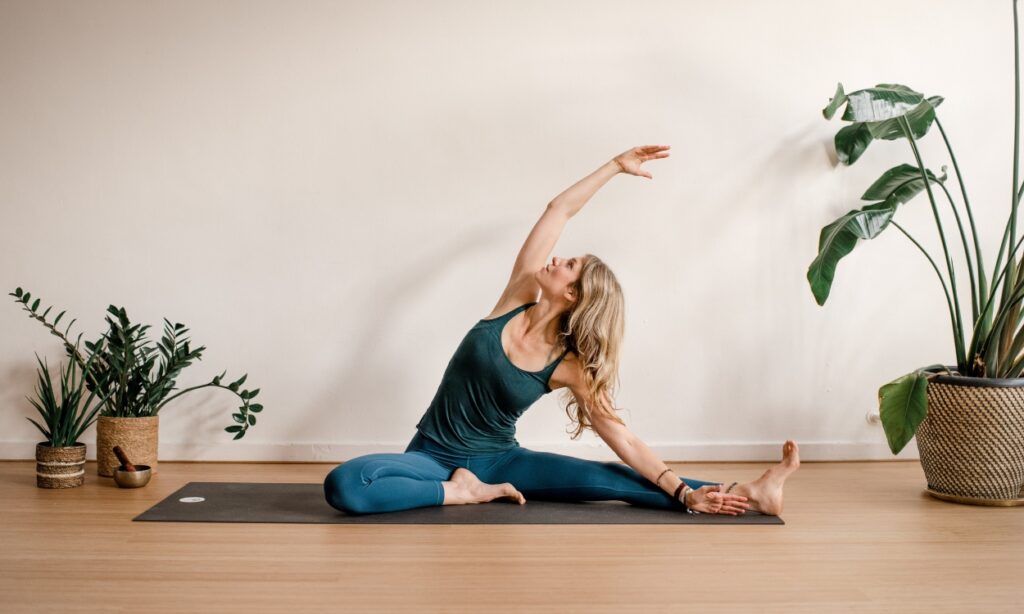
More about Yin yoga
Yin yoga is a calm, meditative yoga style in which you remain in a posture for a few minutes. You usually perform the postures sitting or lying down and use as little muscle strength as possible. In doing so, you give the connective tissue around your muscles and joints a gentle stretch.
You take the time to feel what is happening in your body. You follow your breath and notice where you can release tension. In this way, Yin yoga invites you to slow down and find peace.
Yin yoga can help you move more flexibly and experience less stiffness. Because you stay in a pose longer, you give the connective tissue a gentle stretch. You also learn to better sense where you hold tension and how much stretch suits your body.
The relaxed pace can help reduce stress and unwind. For a while, you don't have to go anywhere or finish anything. By keeping your attention on your breathing and body, space is created to notice how you are doing.
Sometimes you encounter emotions or fixed reactions in the process, such as impatience or the tendency to push through. You practice recognizing these and looking at yourself with more patience. This can also help you outside of class to notice your boundaries sooner and listen to them.
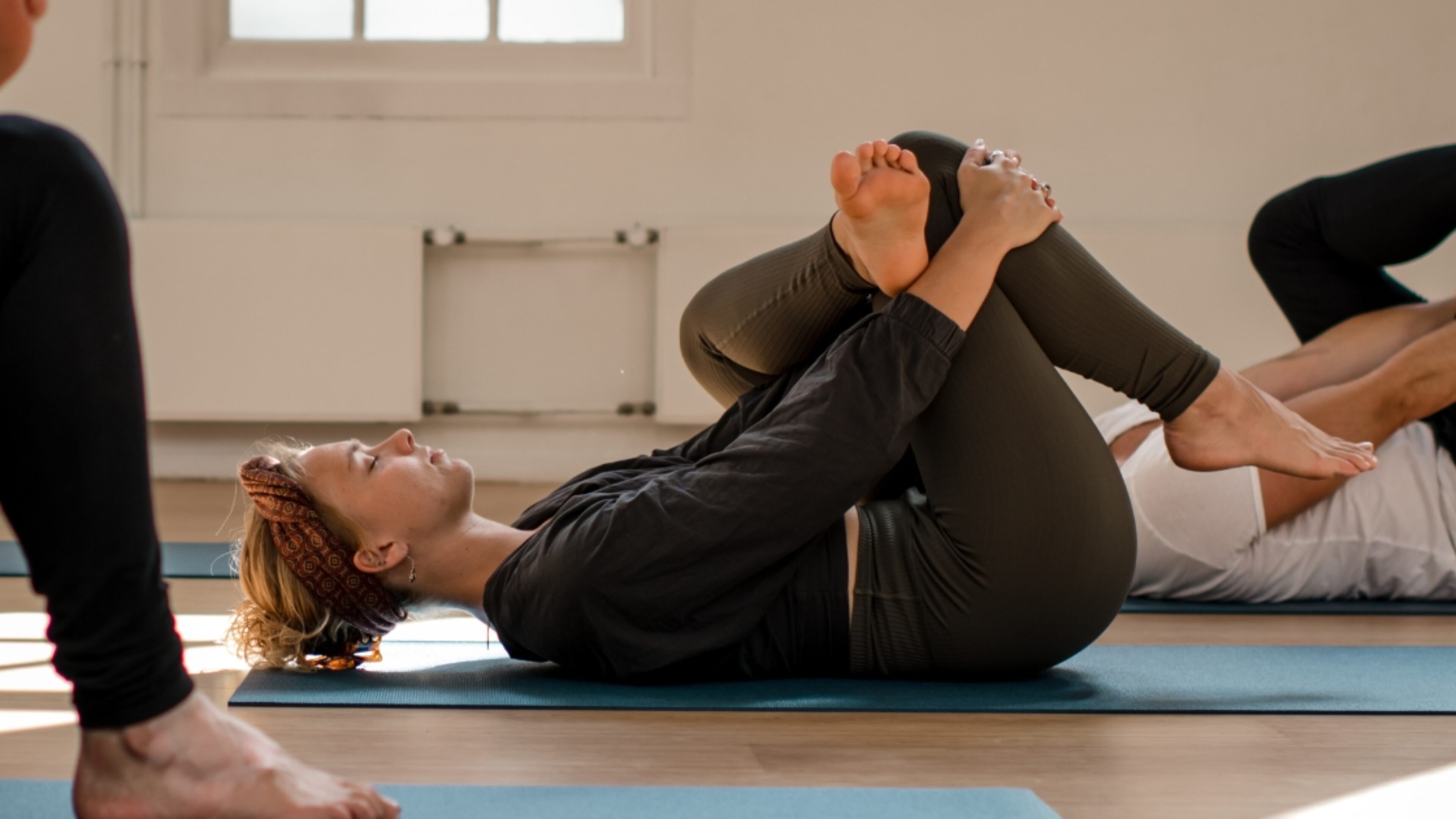
Create a Yin yoga class begins with a quiet moment to settle in and bring your attention to your breath and body. Then, the teacher guides you through a number of poses, usually seated or lying down. You stay in each pose for about three to five minutes. Cushions, blocks, and blankets provide support where you need it.
Between the postures, you take time to feel the sensations. Sometimes you rest briefly, sometimes you perform a gentle movement as a counterweight to the previous posture. The teacher gives calm instructions, interspersed with silence or soft music.
You conclude with a final relaxation (savasana). You lie on the mat and give your body time to rest.
Yin yoga is very suitable if you want start with yogaYou don't need to have any experience or be flexible. The teacher will help you find a pose that suits your body. Cushions, blocks, and blankets can support you with this.
The gentle pace gives you time to feel what a pose does to you and where you can relax. You don't have to go as deep as possible into a pose. You practice within your own limits.
You can also do Yin yoga at home. You don't need much space: a quiet place where you can sit and lie down comfortably is enough. Use pillows and blankets to give your body extra support.
With us you can Yin yoga classes online follow via livestream. You participate at the time of the class and follow the teacher's instructions from your own familiar surroundings.
The difference between Vinyasa and Yin lies mainly in the pace and what you work on. vinyasa yoga Move fluidly from one posture to another, to the rhythm of your breathing. You actively use your muscles and build strength and endurance.
In Yin, you stay in a pose longer and use little muscle strength. You give the connective tissue a gentle stretch and take the time to feel and relax. Vinyasa, therefore, places more emphasis on active movement (Yang), Yin on slowing down and suppleness.
All three yoga styles offer space to relax. The difference lies mainly in how you practice.
In Yin yoga, you stay longer in poses where you feel a gentle stretch. You work on flexibility and take the time to notice what you are thinking and feeling.
At Restorative yoga Pillows, blocks, and blankets support your body. You do not stretch and need to use hardly any muscle strength. This form is suitable if you need rest and want to relax with as little effort as possible.
At Yoga Nidra You lie still and follow the teacher's voice. It guides your attention through your body, breathing, and sometimes images. A great choice if you want to rest and enjoy a guided meditation.
Not sure yet which style or class suits you?
Book a free call with us and we'll help you find a class that meets your needs.
Yoga at De Nieuwe Yogaschool: classes, styles & online
New to DNYS?
Welcome to De Nieuwe YogaschoolWith 60+ classes every week in yoga, breathwork, Pilates, meditation, and more, you will always find something that suits you here.

Yoga for beginners
Are you just starting yoga, or has it been a while? You're welcome just the way you are. We'll help you get started with classes for beginners and more.
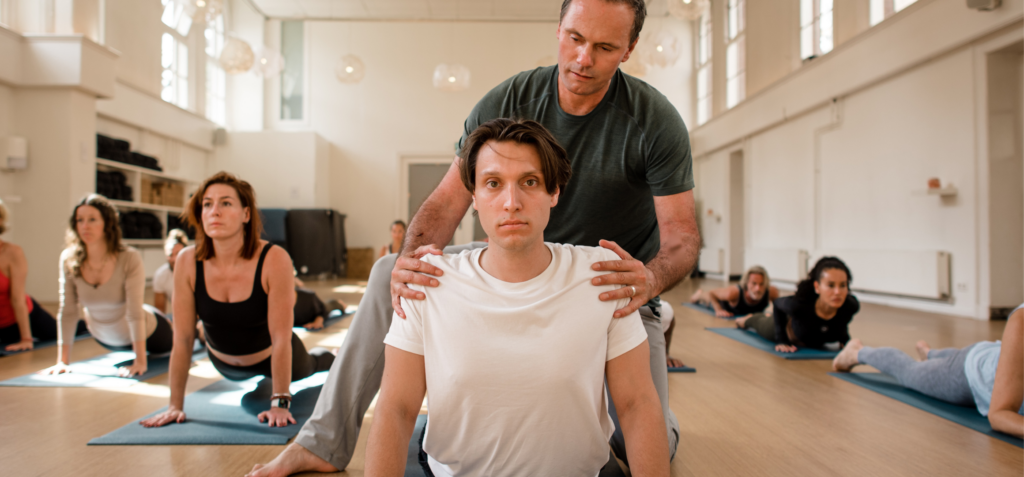
Follow yoga online
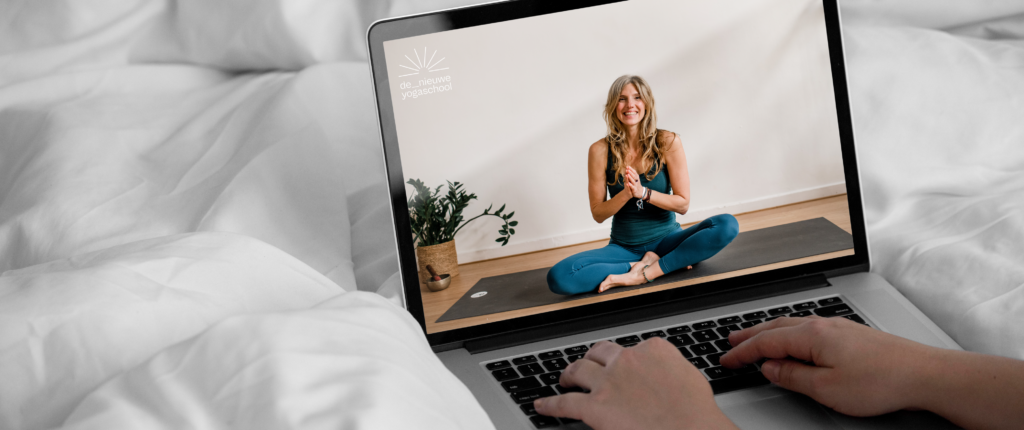
Follow almost all of our classes live online, or watch them later at your convenience. At home on your mat, but with the energy of the studio.
All yoga styles at DNYS
From Vinyasa and Yin to Pilates, breathwork, meditation, and more. Every week you can choose from over 60 different classes. Discover them here.